40 labels and selectors in kubernetes
Ingress | Kubernetes Service: A Kubernetes Service that identifies a set of Pods using label selectors. Unless mentioned otherwise, Services are assumed to have virtual IPs only routable within the cluster network. What is Ingress? Ingress exposes HTTP and HTTPS routes from outside the cluster to services within the cluster. kubernetes - Understanding pod labels vs annotations - Stack Overflow Standard documentation says that annotations captures "non-identifying information". While on labels, selectors can be applied. Labels are used to organise objects in kubernetes cluster.
› kubernetes › kubernetesKubernetes - Labels & Selectors - Tutorials Point Selectors. Labels do not provide uniqueness. In general, we can say many objects can carry the same labels. Labels selector are core grouping primitive in Kubernetes. They are used by the users to select a set of objects. Kubernetes API currently supports two type of selectors −. Equality-based selectors; Set-based selectors; Equality-based ...

Labels and selectors in kubernetes
community.kubernetes.k8s_info module - Ansible It will be removed in version 3.0.0 of community.kubernetes. This is a redirect to the kubernetes.core.k8s_info module. This redirect does not work with Ansible 2.9. The collection contains the following information on this deprecation: The community.kubernetes collection is being renamed to kubernetes.core. github.com › roboll › helmfileGitHub - roboll/helmfile: Deploy Kubernetes Helm Charts Mar 10, 2022 · Multiple labels can be specified using , as a separator. A release must match all selectors in order to be selected for the final helm command. The selector parameter can be specified multiple times. Each parameter is resolved independently so a release that matches any parameter will be used. 60DaysOfK8s- Day 8 Label, Selector, Annotation - Geek lady The label selector is the core grouping primitive in Kubernetes. The API currently supports two types of selectors: equality-based and set-based. A label selector can be made of multiple requirements which are comma-separated. equality - based requirement environment = production tier != frontend Set-based requirement
Labels and selectors in kubernetes. The Tale of Kubernetes! - Analytics Vidhya Kubernetes popularly known as (K8s) is a system for automating deployment, scaling, ... In a service configuration file, a "label selector" defines a collection of pods that make up a single service. The service feature gives the service an IP address and a DNS name, and it round-robins traffic to addresses that match the label selector. ... How to use Node Selectors in Kubernetes - HowtoForge nodeSelector is one of the forms of node selection constraint. nodeSelector is a field of PodSpec. This is a simple Pod scheduling feature that allows scheduling a Pod onto a node whose labels match the nodeSelector labels specified by the user. To know more about Node Selects, click here to go to the official page of the Kubernetes. How to Autoscale Kubernetes Pods Based on GPU - Private AI In this article, we outline the steps to scale Kubernetes pods based on GPU metrics. These steps are performed on a AKS (Azure Kubernetes Service), but work well with most cloud service providers, as well as, with self managed clusters. 10 Easy Steps for Autoscaling Kubernetes Pods Based on GPU. For this tutorial, you will need an API key. Kubernetes field selector alternators possible? - Stack Overflow This question does not show any research effort; it is unclear or not useful. Bookmark this question. Show activity on this post. Is it possible to have alternators in field selectors for kubernetes objects? Something like this, metadata.name=A | metadata.name=B | metadata.name=C. kubernetes. Share. Follow this question to receive notifications.
› docs › latestOverview & Architecture - Open Policy Agent In Kubernetes, Admission Controllers enforce policies on objects during create, update, and delete operations. Admission control is fundamental to policy enforcement in Kubernetes. For example, by deploying OPA as an admission controller you can: Require specific labels on all resources. Require container images come from the corporate image ... ConfigMaps | Kubernetes A ConfigMap is an API object that lets you store configuration for other objects to use. Unlike most Kubernetes objects that have a spec, a ConfigMap has data and binaryData fields. These fields accept key-value pairs as their values. Both the data field and the binaryData are optional. kubernetes.io › docs › conceptsDaemonSet | Kubernetes Apr 21, 2022 · A DaemonSet ensures that all (or some) Nodes run a copy of a Pod. As nodes are added to the cluster, Pods are added to them. As nodes are removed from the cluster, those Pods are garbage collected. Deleting a DaemonSet will clean up the Pods it created. Some typical uses of a DaemonSet are: running a cluster storage daemon on every node running a logs collection daemon on every node running a ... Built-in policy definitions for Azure Kubernetes Service - Azure ... Lists Azure Policy built-in policy definitions for Azure Kubernetes Service. These built-in policy definitions provide common approaches to managing your Azure resources. ... Use specified labels to identify the pods in a Kubernetes cluster. This policy is generally available for Kubernetes Service (AKS), and preview for AKS Engine and Azure ...
docs.microsoft.com › ci-cd-kubernetesMicroservices CI/CD pipeline on Kubernetes - Azure ... A single microservice may involve multiple Kubernetes configuration files. Updating a service can mean touching all of these files to update selectors, labels, and image tags. Helm treats these as a single package called a chart and allows you to easily update the YAML files by using variables. What is the difference between Label and Selector in ... Feb 2, 2020 — Via a label selector, the client/user can identify a set of objects. The label selector is the core grouping primitive in Kubernetes. In a ...2 answers · Top answer: Labels are key/value pairs that are attached to objects, such as pods. Labels are intended ...Kubernetes field selectors vs label selectors - Stack OverflowMar 19, 2020How can the OR selector be used with labels in Kubernetes?Sep 3, 2017service selector vs deployment selector matchlabels - Stack ...Sep 13, 2020Querying pods by multiple labels - kubernetes - Stack OverflowOct 8, 2020More results from stackoverflow.com Get service by label selector did not match the real label Cluster information: Kubernetes version:1.14.4 Cloud being used: bare-metal Installation method: kubeadm Host OS: CentOS7.6 CNI and version: Calico 3.3.6 CRI and version: Docker 18.09.5 I'v got a svc: apiVersion: v1 kind: Service metadata: labels: app: service-apollo-admin-server name: service-apollo-admin-server namespace: apollo spec: ports ... Demystifying the Kubernetes Iceberg: Part 1 | Anton Sankov's Blog Service is a Kubernetes object that provides an abstraction point over a group of pods based on label selectors. When Pods are created in Kubernetes, each one of them is assigned an IP address. However, we said that Pods are ephemeral, and when one dies, it is never restarted. Instead, a new one is created, which means it gets a new IP address.
ReplicaSet - Kubernetes Myanmar
Kubernetes Basics Labels Selectors Controllers Services Control Pane API Architecture: Nodes can be virtual or physical hosts Docker has to be installed on all of the nodes Each minion will run ETCD (key pair...
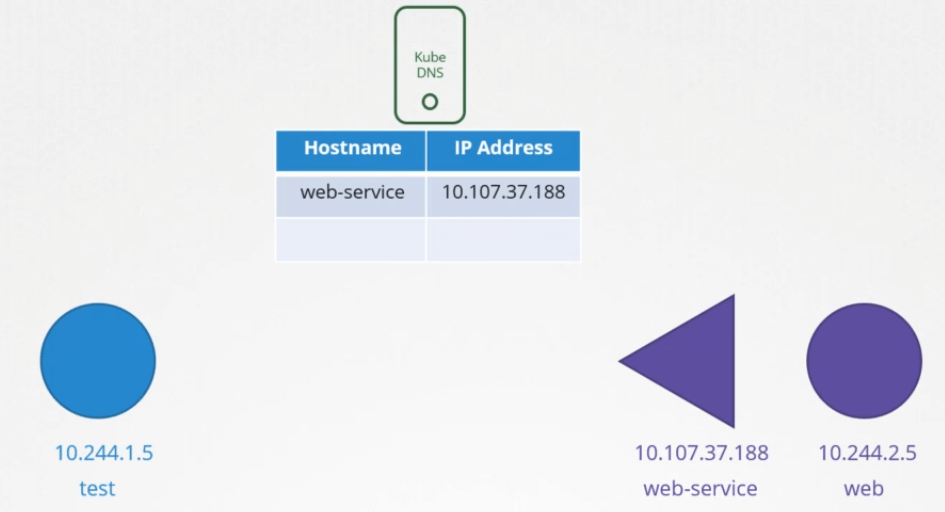
DNS in Kubernetes - Waytoeasylearn
Understanding the Kubernetes Architecture - ThinkSys Labels and Selectors: Labels are value pairs linked to objects like pods used to showcase the characteristics or information relevant to the users. These can either be added while objects are created or modified later. Moreover, they can also be used for organizing or selecting subsets of objects.

Introduction - Kubernetes Handbook
Kubernetes Day-2 Operations - Part III | HackerNoon CloudPlex addresses challenges of Kubernetes day-2 operations. CloudPlex is on a mission to make Kubernetes a lot friendlier for developers by bringing automation to the bunch. ... They can attach deployments to nodes via the visual interface while the platform automates the handling of node labels and selectors. CloudPlex, by fixing the ...
Kubernetes on Apple Books
Learning: Kubernetes - Labels & Selectors, Finalizers Labels & Selectors Labels - Labels are key-value pairs attached to pods, ReplicaSet & Services. They are used for identifying objects for pods and ReplicaSet. It can be added at the creation time or can be modified or added at the run time. Some properties - must be 63 characters or less (can be empty),unless…
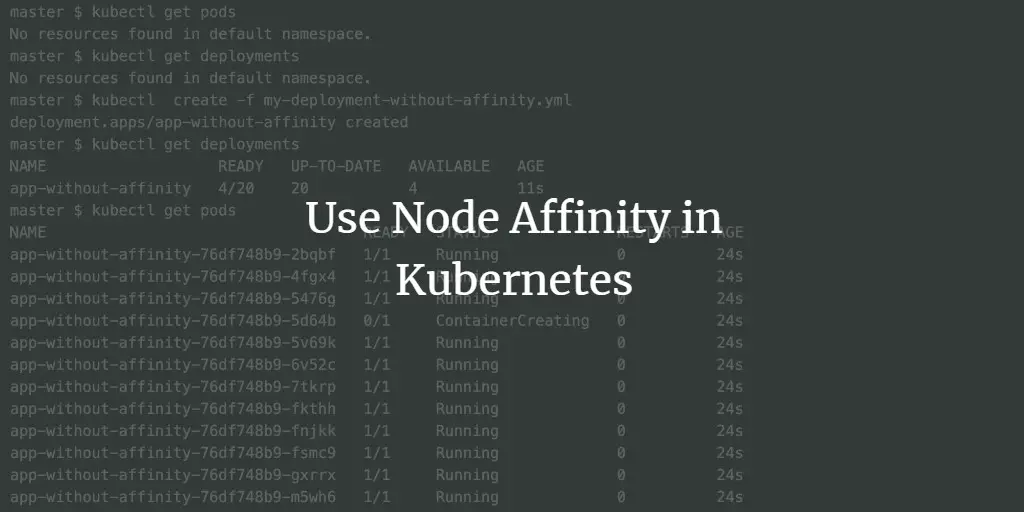
Use Node Affinity in Kubernetes
DRY Kubernetes Parameters (Secrets, ConfigMaps) | CloudTruth First things first, you'll need a CloudTruth project. You can create one called kubernetes-secrets. Next, create some parameters inside of the kubernetes-secrets project. cloudtruth --project kubernetes-secrets parameter set --value nginx app_name cloudtruth --project kubernetes-secrets parameter set --value 3 replicas cloudtruth --project ...

Kubernetes 101 : Deployment, services, endpoints, pods, labels and ...
Kubernetes API Reference Docs Welcome to the Kubernetes API. You can use the Kubernetes API to read and write Kubernetes resource objects via a Kubernetes API endpoint. Resource Categories. This is a high-level overview of the basic types of resources provide by the Kubernetes API and their primary functions. Workloads are objects you use to manage and run your containers on the …
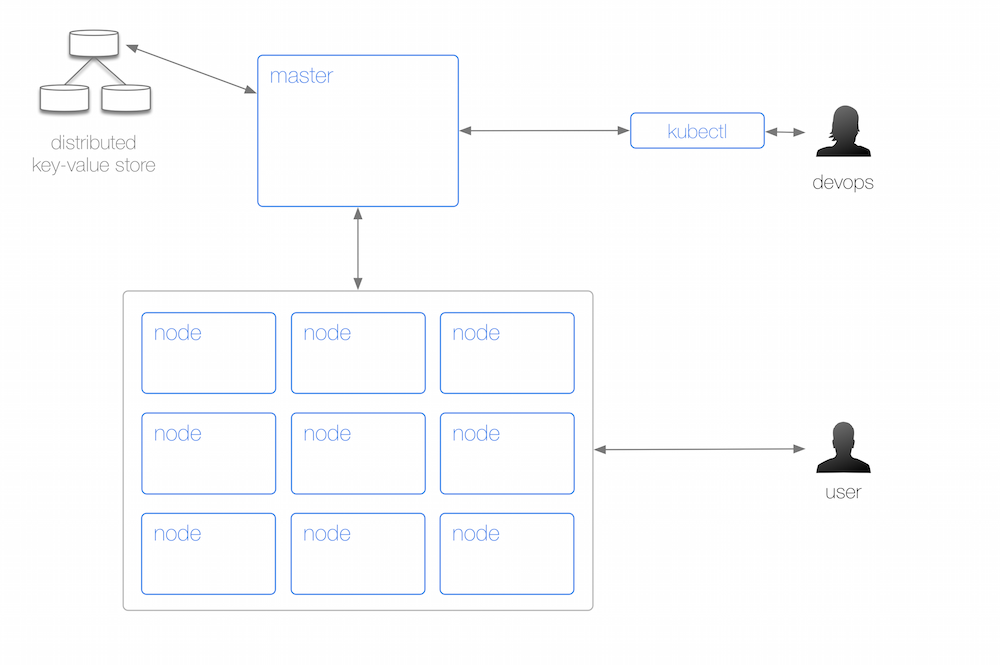
kubernetes
Secrets | Kubernetes In order to safely use Secrets, take at least the following steps: Enable Encryption at Rest for Secrets. Enable or configure RBAC rules that restrict reading and writing the Secret. Be aware that secrets can be obtained implicitly by anyone with the permission to create a Pod.

Kubernetes Architecture - Waytoeasylearn
Jobs | Kubernetes In addition to required fields for a Pod, a pod template in a Job must specify appropriate labels (see pod selector) and an appropriate restart policy. Only a RestartPolicy equal to Never or OnFailure is allowed. Pod selector The .spec.selector field is optional. In almost all cases you should not specify it.
Prepare for the Certified Kubernetes Administrator(CKA) with Practice ...
What Are Kubernetes Labels? - Papersdude.com What are labels and selectors in Kubernetes? Labels can be used to organize and to select subsets of objects. Via a label selector, the client/user can identify a set of objects. The label selector is the core grouping primitive in Kubernetes. In a nutshell label selectors depend on labels to select a group of resources such as pods.
Post a Comment for "40 labels and selectors in kubernetes"